
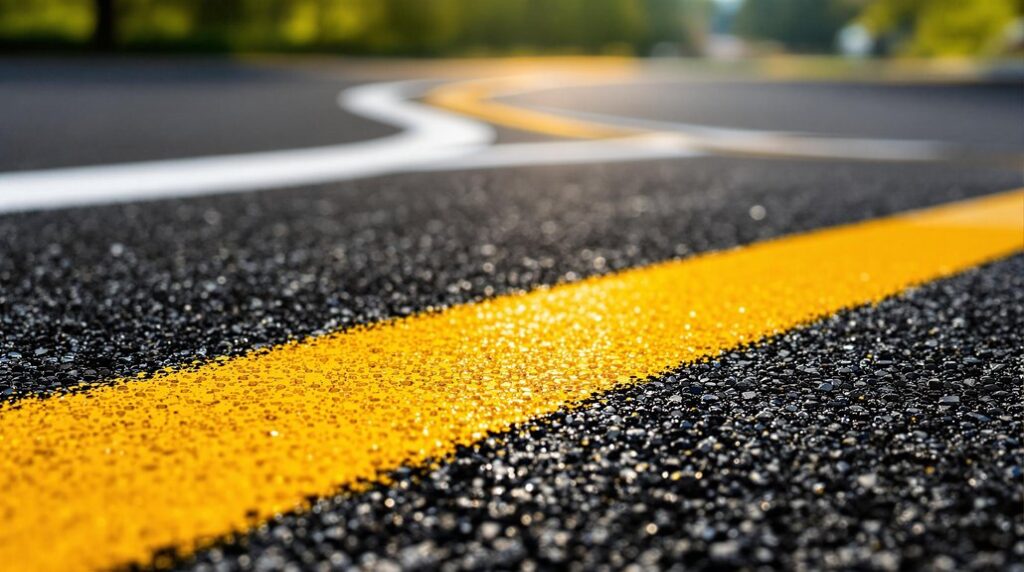
Thermoplastic line markings offer a robust and visible solution for road surfaces like asphalt and concrete. These markings require heating to 180-200°C for proper adhesion, and they include reflective glass beads for enhanced visibility, especially in low-light conditions. Their durability minimizes the need for frequent reapplication, ultimately saving costs. With quick application times of 5-10 minutes and eco-friendly formulations, they are increasingly preferred for high-traffic areas. Uncover more about their varied applications and enduring benefits.
Overview of Thermoplastic Line Markings
When you’re considering effective solutions for road and surface markings, thermoplastic line markings stand out due to their durability and visibility. These markings are versatile, suitable for various surfaces like asphalt and concrete, making them ideal for roads, car parks, and playgrounds. The application process requires heating the thermoplastic to 180-200°C, ensuring excellent adhesion and quick setting, usually ready for use in just 5-10 minutes. Incorporating reflective glass beads enhances visibility during low-light conditions and adverse weather, essential for high-traffic areas. Additionally, thermoplastic materials resist fading, cracking, and wear, leading to a longer lifespan than traditional markings, which means fewer reapplications. The range includes preformed shapes, custom logos, and colors tailored to meet specific needs. Moreover, these markings provide extended durability due to their ability to withstand continuous play and heavy foot traffic.
Benefits of Using Thermoplastic Line Markings
Thermoplastic line markings offer numerous advantages that make them an ideal choice for road and surface applications. Their high durability and longevity often surpass traditional marking solutions, appreciably reducing reapplication and maintenance costs. Enhanced visibility is another key benefit, especially when reflective glass beads are incorporated, ensuring safety during both day and night. The quick application process allows markings to be ready for use within 5-10 minutes, minimizing traffic disruption. Additionally, thermoplastic materials resist fading, cracking, and adverse weather, making them suitable for high-traffic areas and various environmental conditions. Finally, using eco-friendly formulations, including bio-based resins and recycled materials, promotes sustainability in road safety solutions, aligning with modern environmental concerns. These markings also provide interactive, educational experiences for children, enhancing their outdoor playtime.
Application and Installation Process
The application and installation process of thermoplastic line markings involves several key steps that assure efficiency and effectiveness. First, you’ll need a propane heat torch to heat the thermoplastic material to its melting point of 180-200°C. After this, spread the melted material onto the prepared surface for maximum adhesion. It’s advisable to apply a primer tack coat on certain surfaces, especially if old markings exist or moisture is present, to enhance bonding. Confirm the application area is completely dry and free of debris for ideal results. Typically, the markings cool and are ready for use within 5 to 10 minutes, which minimizes disruption to traffic flow. This process can be efficiently executed by a single operative, making it versatile for various environments. Furthermore, the use of high-quality thermoplastic ensures durability and vibrant colors that stand out on playground surfaces.
Environmental Considerations
While many road marking materials can negatively impact the environment, thermoplastic line markings stand out for their sustainable attributes. These markings often incorporate bio-based resins and recycled materials, promoting sustainability during production. Additionally, many thermoplastic products are engineered to emit low levels of volatile organic compounds (VOCs), which contributes to better air quality. Their durability means you won’t need to reapply them as frequently, reducing waste and the environmental impact of road maintenance. Reflective glass beads enhance visibility, ensuring compliance with safety regulations while maintaining environmental standards. Furthermore, thermoplastic materials can endure harsh weather, minimizing the need for harmful chemicals during maintenance. Overall, these attributes make thermoplastic line markings a responsible choice for road safety and environmental health. Moreover, the durable thermoplastic materials used in these markings ensure they withstand heavy use, further promoting sustainability.
Performance Features and Durability
Durability is a defining characteristic of thermoplastic line markings, making them a preferred choice for road safety. These markings outlast traditional solutions, boasting a lifespan that exceeds expectations due to their resistance to fading, cracking, and heavy traffic wear. Designed to endure extreme weather conditions, they resist UV radiation, rain, snow, and high temperatures, ensuring consistent performance. The incorporation of reflective glass beads greatly enhances visibility during nighttime and adverse weather, improving safety for both drivers and pedestrians. Additionally, the quick setting time of 5-10 minutes minimizes traffic disruption. Engineered for low maintenance, thermoplastic markings require less frequent reapplication, leading to reduced long-term costs, making them a practical investment for road safety and maintenance efficiency.
Industry-Specific Applications
Numerous industries rely on thermoplastic line markings for their unique applications, showcasing the versatility and effectiveness of this material. On highways and motorways, these markings guarantee safe navigation by clearly delineating lanes and hazard warnings. In urban settings, they enhance traffic management by marking pedestrian crossings, cycle lanes, and bus lanes, improving pedestrian safety. Airports benefit from thermoplastic markings on runways and taxiways, defining operational zones for aircraft, which promotes safety and efficiency. Industrial facilities utilize these markings to establish traffic lanes, walkways, and safety zones, effectively organizing space and reducing accidents. With their high durability and resistance to harsh weather, thermoplastic markings are ideal for heavy traffic areas, greatly lowering maintenance costs and the need for frequent reapplications.