
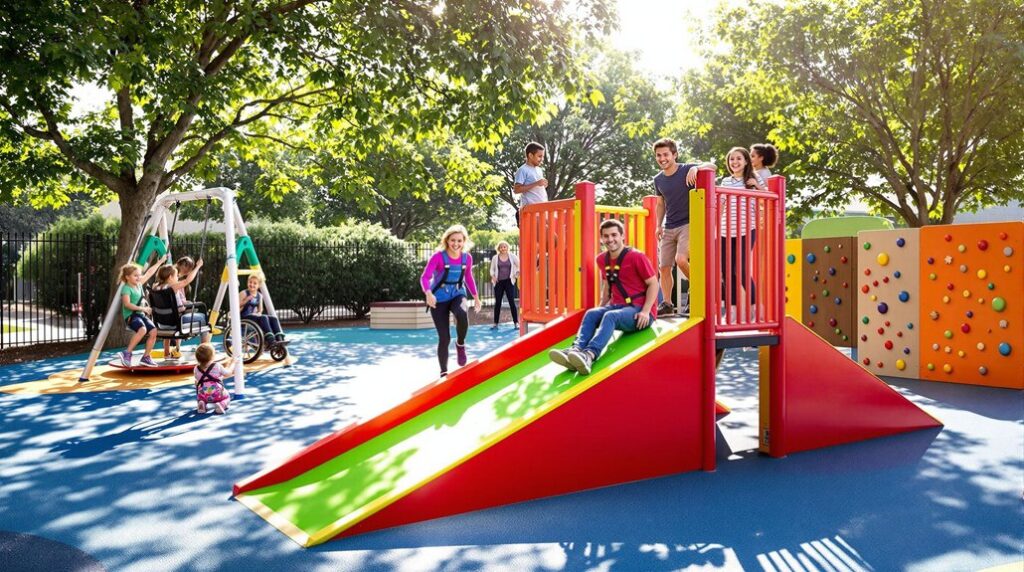
If you’re looking for playground equipment for wheelchair users, inclusive options like universal carousels and transfer-free seesaws promote accessibility. Many designs incorporate ramps, accessible swings, and smooth surfaces to guarantee easy navigation. Safety features such as cushioned fall zones enhance protection for all users. Additionally, diverse sensory play options cater to varied abilities. By creating an inclusive play environment, communities foster social interaction and engagement while breaking down barriers. Uncover more about the benefits and designs of inclusive playgrounds.
Types of Inclusive Playground Equipment
Inclusive playground equipment plays an essential role in guaranteeing that children of all abilities can enjoy shared play experiences. Motion and movement equipment, such as universal carousels and inclusive swings, facilitates interaction through accessible designs. Kinetic sand play offers sensory engagement, while transfer-free seesaws allow users to participate without exiting their mobility devices. For upper body strength, accessible climbing equipment and transfer stations provide safe changes. Dramatic play areas include wheelchair-accessible playhouses and themed zones that stimulate imaginative engagement. Communication equipment, like musical play structures and interactive panels, fosters social interaction. Ground-level features, including sensory stations and accessible sandboxes, guarantee creative play opportunities. Each type of equipment contributes greatly to a fully inclusive play environment, enhancing active learning and engagement for all children.
Design Principles for Accessibility
When designing playgrounds for accessibility, it’s essential to incorporate principles that guarantee all children can engage in play effectively and safely. Start by using ground cover materials like poured-in-place surfacing to make sure wheelchair users can navigate easily. Maintain a clear line of sight for all users, allowing everyone to see important elements. Provide adequate space for assistive devices and consider perceptible information, like clear signage, to enhance navigation. Accessible entrances should be prioritized, and ramps must seamlessly integrate into play structures. Design adaptable equipment that accommodates various abilities, and guarantee intuitive use through clear instructions. Finally, focus on safety by implementing unitary surfacing and creating quiet spaces for rest, enhancing the overall play experience for everyone. Additionally, incorporating thermoplastic playground markings can further define safe play zones and enhance the visual appeal of accessible areas.
Benefits of Inclusive Playground Equipment
Playground equipment designed for wheelchair users offers a range of benefits that extend far beyond mere accessibility. Such inclusive equipment supports physical development by encouraging active play, which enhances skills like climbing and sliding, fostering confidence and independence in children with mobility limitations. Socially, these playgrounds promote interaction among children of varying abilities, cultivating empathy and essential social skills like conflict resolution. Cognitively, diverse play elements stimulate creativity and problem-solving, while emotional benefits arise from a sense of belonging, boosting self-esteem. Ultimately, inclusive playgrounds serve as community hubs, fostering social cohesion and breaking down barriers between children with and without disabilities. By creating an environment that encourages participation, these spaces contribute to healthier, more integrated communities.
Popular Examples of Inclusive Equipment
The landscape of playground equipment has evolved considerably to accommodate the needs of wheelchair users, offering a variety of options designed to enhance play experiences for all children. Notable examples include the Zero-G Swing Seat, which supports wheelchair users with its high back and molded harness. Ramped slides and inclusive net twisters allow for independent access, while universal carousels enable users to engage after assistance. Additionally, sensory wave climbers and musical instruments cater to diverse sensory needs. Dramatic play pieces and inclusive zip lines foster imaginative play, while accessible entry points guarantee that all areas are navigable. These pieces collectively promote social interaction, creativity, and inclusivity, making playgrounds enjoyable for every child.
Materials Used in Accessible Playground Equipment
Accessible playground equipment relies on a variety of specialized materials that enhance safety, durability, and user experience for children with mobility challenges. Poured-in-place rubber (PIP) and rubber tiles (TIL) create cushioned, slip-resistant surfaces, guaranteeing compliance with ADA standards. Structural components like fiberglass-reinforced composites and powder-coated steel provide strength and corrosion resistance for ramps and decks. Shatterproof plastics and thermoplastic-coated handrails contribute to safety by reducing injury risks and providing secure grips. Additionally, hybrid systems, which combine materials, balance durability and cost-effectiveness. Features like firm surfaces, well-designed ramp gradients, and tactile pathways guarantee accessibility for all users. These materials collectively support a safe and engaging environment, fostering inclusive play experiences for children with diverse abilities.
Safety Considerations for Playground Equipment
When designing playground equipment, prioritizing safety considerations is vital for guaranteeing an inclusive environment that accommodates all users, especially those with mobility challenges. Non-slip surfaces, like rubber tiles and wetpour materials, prevent slips for wheelchair users, while unobstructed, wide pathways facilitate easy access. Smooth shifts between surfaces eliminate barriers, enhancing mobility. Safety features must include cushioned fall zones, railings to prevent falls, and equipment designed to avoid entrapment hazards. Additionally, ramps with accessible slopes and appropriately sized platforms guarantee safe access to play structures. Regular maintenance is important to keep pathways clear, and clear signage can guide users to accessible routes, ultimately creating a safer, more enjoyable playground experience for all.
Implementation of Inclusive Playgrounds
Creating inclusive playgrounds requires a thorough approach that integrates community engagement, adherence to policy standards, and thoughtful design. Engaging community stakeholders early on guarantees that diverse perspectives, including those from families and individuals with disabilities, inform the design process. This collaboration not only raises awareness but also fosters emotional investment in the project. Compliance with local and national accessibility standards is vital, guiding design parameters and guaranteeing equitable access. Institutional leadership is essential for coordinating efforts among policymakers, designers, and community members, while clear roles enhance accountability. Adequate funding must be secured through diverse streams, addressing installation and ongoing maintenance needs. Finally, thoughtful site selection and design integration promote accessibility and enjoyable play experiences for all users.
Availability of Playground Equipment for Wheelchair Users
How can communities guarantee that playgrounds cater effectively to wheelchair users? First, adherence to ADA standards is essential, requiring ground-level play elements and clear wheelchair paths. Ramps with a 1:12 slope ratio must connect various play components, ensuring full accessibility. Additionally, at least 50% of ground-level components should be ADA-compliant, including tactile activity panels and adaptive swings. Key manufacturers like Noah’s Park & Playgrounds and PlaygroundEquipment.com offer budget-friendly, accessible options. Design considerations also include shock-absorbing surfaces and shaded areas near accessible seating. Costs for inclusive systems typically start around $5,000, but modular designs allow for phased implementation, helping communities manage their budgets while ensuring all children can enjoy playgrounds together.
The Importance of Community Awareness and Support
Community awareness and support play an essential role in ensuring that playgrounds are accessible to all children, including those who use wheelchairs. By promoting inclusive design, communities can meet accessibility standards, incorporating wheelchair ramps and shared spaces that facilitate navigation. Engaging the community fosters a sense of ownership, encouraging collaborative efforts among organizations, businesses, and government agencies. Awareness campaigns and educational programs raise consciousness about the importance of accessible playgrounds, while fundraising and volunteer participation help finance these initiatives. Accessible playgrounds not only enhance social interaction but also boost local tourism and commerce, creating economic opportunities. Ultimately, community investment in these spaces reflects a commitment to equity and inclusion, benefiting all residents.