
The Sports Premium is allocated based on specific eligibility criteria, primarily for schools with primary-age pupils. Schools with 17 or more eligible students receive a base funding of £16,000 plus £10 for each additional pupil, while smaller schools get £1,000 per pupil. Payments are made in two instalments each academic year. This funding supports various physical education initiatives, from equipment purchases to professional development for teachers, ensuring effective use to enhance student engagement and fitness. Uncover more about how this funding impacts schools.
Eligibility Criteria for Funding
To determine eligibility for the Sports Premium funding, schools must meet specific criteria that primarily focus on the enrollment of primary-age pupils. Generally, most schools with pupils in years 1 to 6 qualify for this funding. If a school lacks defined year groups, eligibility is based on students aged 5 to 10. However, exceptions exist; nursery schools and independent institutions typically don’t qualify, though non-maintained special schools can receive funding. Additionally, special schools with flexible age ranges remain eligible, while studio schools and university technical colleges are excluded. For new or restructuring schools, funding criteria may slightly vary, necessitating that you assess your institution’s specific situation to determine eligibility accurately. Understanding these nuances is vital for effective funding application.
Allocation Amounts Based on School Size
Allocation amounts for the Sports Premium funding are structured based on the size of the school, ensuring that resources are distributed equitably to support physical education and sports initiatives. Schools with 17 or more eligible pupils begin with a base funding of £16,000, supplemented by £10 for each pupil in Years 1 to 6. For smaller schools, those with 16 or fewer eligible pupils, the allocation is £1,000 per pupil. Funding calculations rely on data from January or autumn school censuses, adapting to the school’s status. Special schools may have different allocations, focusing on pupils aged 5 to 10 if year groups aren’t clearly defined. These structures aim to enhance sports provision tailored to each school’s needs.
Allocation Process and Payment Timing
While schools must meet specific criteria to receive funding, the allocation process for the Sports Premium is designed to guarantee that resources are distributed effectively based on pupil numbers. Funding is primarily allocated to most schools with primary-age pupils, using data from the January census to determine eligibility. Schools with 16 or fewer eligible pupils receive £1,000 per pupil, while those with 17 or more get a base amount of £16,000 plus £10 per additional pupil. Payments are typically disbursed in two instalments each academic year, aligning with school terms. For instance, the first instalment for 2023 to 2024 was paid in early November, with the second scheduled for early May, ensuring timely financial support for schools.
Uses of Funding for PE and Sports
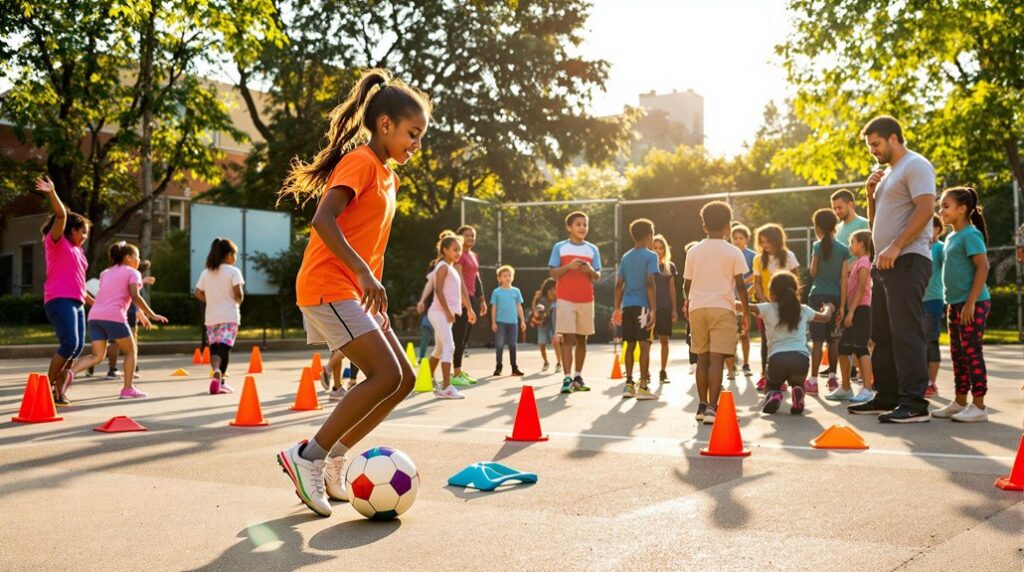
The effective use of funding for physical education (PE) and sports can greatly enhance student engagement and overall health outcomes. Schools can utilize various grants to develop fitness-focused programs, incorporating activities like yoga and dance, which appeal to a broader range of interests. Funding also allows for the purchase of new equipment and the upgrade of facilities, ensuring students have access to safe and modern resources. Professional development opportunities for PE teachers, including training workshops and certification courses, enhance instructional quality. Additionally, initiatives supporting underrepresented groups, such as scholarships for low-income families and inclusive programs for students with disabilities, promote equitable access to sports, fostering a more inclusive environment for all students. Furthermore, integrating thermoplastic markings into playgrounds can create engaging spaces that promote active play and social interaction among students.
Impact and Evaluation of Spending
Evaluating the impact of spending on physical education and sports programs provides valuable insights into the effectiveness of funding initiatives. By employing activity monitoring tools, you can track pupil participation rates and adherence to daily activity guidelines. Specialist coaches enhance lesson quality through structured curriculums, while attendance tracking guarantees that supplementary funding prioritizes underused activities. Local partnerships reduce costs, fostering greater event participation. Key outcomes, such as teacher competence and pupil engagement levels, are measured through standardized review templates and parental feedback channels. Although challenges like sustainability tracking and data gaps exist, successful indicators, like increased club membership and citywide event participation, demonstrate the potential benefits of strategic spending in enhancing sports accessibility and engagement for all students.