
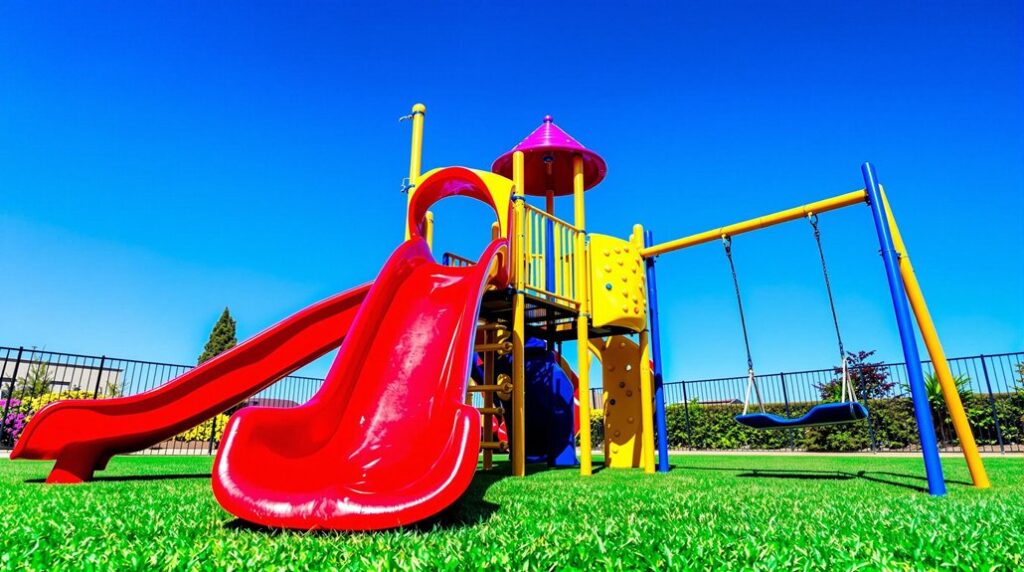
Hard plastic playground equipment provides durability, safety, and design flexibility, making it a practical choice for modern play areas. Utilized materials such as HDPE and PVC guarantee that surfaces are smooth and impact-resistant, reducing injury risks. Additionally, these materials allow for intricate designs and vibrant colors, enhancing user engagement. Their low maintenance requirements and long lifespan contribute to cost-effectiveness. Exploring the specifics of their benefits and safety features can reveal more about making informed playground choices.
Benefits of Hard Plastic Playground Equipment
Hard plastic playground equipment offers a range of benefits that make it an increasingly popular choice for playgrounds. To begin with, safety is paramount; the smooth surfaces considerably reduce the risk of splinters and rust, while impact-resistant materials better absorb shocks compared to metal or untreated wood. Additionally, these surfaces are less likely to retain heat, minimizing burn potential under sunlight. Durability is another key advantage; UV-stabilized plastics resist fading and withstand extreme temperatures, ensuring a long lifespan without warping, rotting, or corrosion. Maintenance is simplified, as hard plastic requires no painting or seasonal treatments, and cleaning is straightforward. Finally, the design flexibility allows for vibrant colors and themed structures, making playgrounds both appealing and functional. Moreover, the eco-friendly and non-toxic nature of hard plastic ensures a safe environment for children while promoting sustainable solutions.
Types of Plastics Used in Playground Equipment
When selecting playground equipment, the types of plastics used play a significant role in determining both safety and durability. High-Density Polyethylene (HDPE) is a popular choice for slides and platforms, known for its strength and UV resistance. For parts requiring flexibility, Linear Low-Density Polyethylene (LLDPE) is often utilized. Polyamides, or nylons, offer excellent mechanical strength, making them suitable for various components. Polytetrafluorethylene (PTFE) is occasionally used for its non-stick properties in specialized applications. Acryl glass is integrated for decorative elements, providing clarity. Manufacturing methods like rotational molding create hollow structures for slides and tunnels, while injection molding produces smaller parts. Each plastic type contributes to a playground’s overall functionality, ensuring it meets safety and durability standards effectively. Additionally, incorporating thermoplastic markings can further enhance the play experience by providing engaging and educational graphics for children.
Safety Features of Plastic Play Structures
As you explore the safety features of plastic play structures, you’ll find that these designs prioritize child safety through a variety of innovative measures. They incorporate age-specific features, such as enclosed bucket seats for younger children, while minimizing entrapment spaces to prevent accidents. The materials used, including HDPE and PVC, guarantee durability and resistance to cracking under weight. Additionally, regular inspections and maintenance programs are essential for identifying hazards and guaranteeing safety features remain effective. Plastic’s smooth surfaces eliminate sharp edges, reducing injury risks, and water drainage systems prevent hazards around play areas. With compliance to safety regulations and continuous monitoring, these structures offer a secure environment for children to enjoy.
Design Flexibility and Customization Options
With an emphasis on design flexibility and customization options, plastic playground equipment can be tailored to meet diverse needs and preferences. Materials like HDPE, ABS, and PVC provide excellent moldability, allowing for intricate designs and various color choices. Rotational molding stands out as a highly versatile technique, enabling the creation of complex structures without seams, enhancing both aesthetic appeal and functionality. Custom graphics and textures can be integrated during fabrication, ensuring that each playground can reflect unique themes or characters. This capacity for innovation permits the incorporation of detailed surface features and sculptural designs, making the playground more engaging. Ultimately, these customization options allow you to create a space that resonates with your community’s vision. Additionally, the use of child safe thermoplastic ensures that the playground equipment not only looks good but also prioritizes safety for children during play.
Durability and Maintenance Considerations
Hard plastic playground equipment combines design flexibility with impressive durability, making it a practical choice for various outdoor environments. Constructed from materials like High-Density Polyethylene (HDPE) and ABS, this equipment is resistant to weather and UV damage, although prolonged sun exposure can lead to degradation. While hard plastic can handle typical use, it may fall short under the weight of older children or adults. Maintenance is minimal; it requires easy cleaning and does not need sealing or painting. Regular inspections are essential to identify minor issues, such as cracks, which can extend the equipment’s lifespan. Additionally, using UV-resistant treatments can help preserve its integrity and appearance over time, ensuring ongoing safety and functionality. Furthermore, the use of thermoplastic materials can significantly enhance the equipment’s durability and resistance to wear.
Environmental Impact and Sustainability
While examining the environmental impact and sustainability of playground equipment, you’ll find that hard plastic options stand out due to their incorporation of recycled materials. These materials, like high-density polyethylene (HDPE), greatly reduce the need for extracting raw resources and minimize energy consumption during production. Unlike traditional non-recyclable plastics, hard plastic components contribute less to environmental degradation. However, the entire lifecycle of playground equipment, from material extraction to disposal, affects its overall environmental footprint. By prioritizing recyclable materials and implementing waste reduction strategies, you can guarantee a more sustainable playground. Regular maintenance extends the lifespan of equipment, while proper disposal methods for recyclable materials help mitigate landfill waste, fostering a more eco-friendly approach to playground design and use.
Manufacturing Processes for Plastic Playground Components
The manufacturing processes for plastic playground components play a significant role in determining their quality, safety, and environmental impact. Techniques like rotational, injection, and blow molding allow for precise shaping of materials, while extrusion produces uniform components. Choosing the right materials is essential; virgin resins offer high-quality designs, whereas recycled plastics enhance sustainability. Quality control checkpoints throughout manufacturing guarantee adherence to safety standards, with rigorous testing validating the equipment’s safety for children. Additionally, pre-assembly at factories simplifies installation, and final inspections assure structural integrity. Customization options, enabled by flexible molding methods, allow for tailored playground designs. Ultimately, these processes collectively influence the durability and longevity of playground equipment, guaranteeing a safe play environment for kids.
Cost-Effectiveness of Hard Plastic Equipment
When evaluating the cost-effectiveness of hard plastic playground equipment, several factors come into play that influence both initial expenses and long-term financial implications. High-density plastic generally has lower initial costs compared to metal options like steel, which can save you money upfront. However, while plastic is easier to handle and install, it may require more maintenance due to issues like fading and cracking. This might lead to higher long-term costs. Additionally, using recycled plastic can reduce environmental impact and potentially lower raw material costs. Custom designs and themed elements can enhance user experience but will increase production expenses. It’s crucial to weigh these factors against your budget to guarantee overall cost-effectiveness in your playground project.