
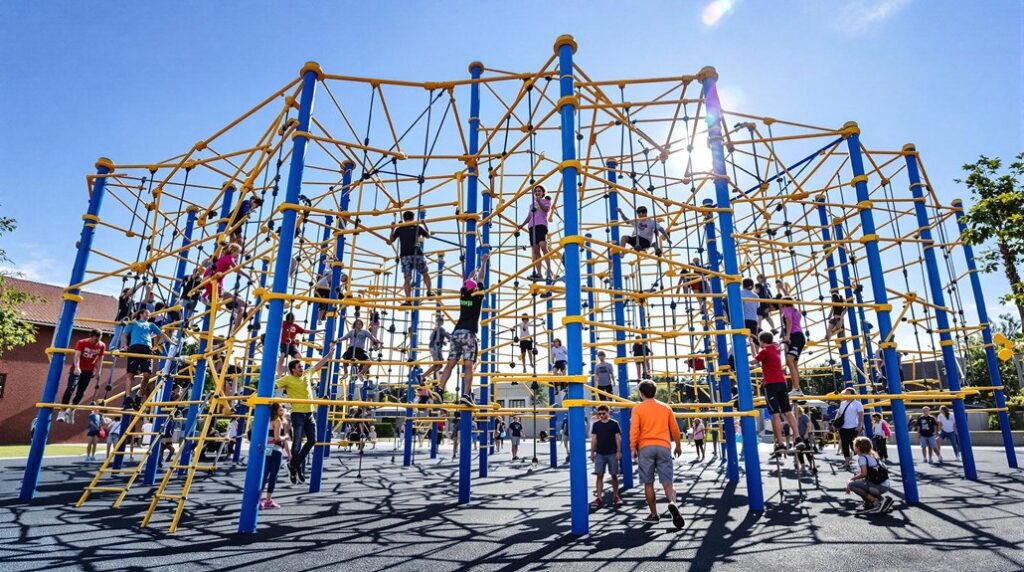
Climbing playground equipment includes various structures like freestanding climbers, dome climbers, and net climbers, each tailored for different age groups and abilities. These designs enhance physical activity, social interaction, and developmental skills such as balance and coordination. Safety features, like fall zones and inclusive designs, guarantee accessibility for all children. Pricing varies based on size, materials, and customization options. Exploring this topic further reveals more about the benefits and innovations in climbing equipment.
Types of Commercial Climbers
When considering types of commercial climbers, five primary categories stand out: freestanding climbers, net climbers, quad climbers, dome climbers, and climbing walls with panel variants. Freestanding climbers provide independent structures, perfect for space-limited areas, and are designed for specific age groups, offering age-appropriate challenges. Net climbers utilize tensioned ropes or cables to promote upper body strength and encourage cooperative play. Quad climbers feature four-sided configurations that emphasize balance and upper body development. Dome climbers present spherical frameworks that enhance spatial awareness through 360-degree climbing routes. Finally, climbing walls and panel variants incorporate textured surfaces for grip strength and customization, often integrating with other playground elements to create engaging play experiences that cater to various skill levels.
Features and Specifications
Climbing playground equipment is designed with various features and specifications that enhance both safety and playability, guaranteeing a rich experience for users. Materials like galvanized steel and pressure-treated wood provide structural integrity, while vandal-resistant components assure longevity in commercial settings. Designs such as spider web climbers and spinning nets foster multi-directional challenges and vestibular stimulation. Safety standards, governed by CPSC guidelines, require appropriate fall zones and entanglement-resistant gaps, safeguarding user protection. Additionally, customization options, including CAD-supported designs and thematic color schemes, allow for tailored installations. These specifications not only prioritize user safety but also promote physical and cognitive development, making climbing equipment an essential addition to any playground.
Age Group Considerations
Understanding age group considerations is essential for designing effective climbing playground equipment, as each developmental stage presents unique needs and safety requirements. For infants and toddlers, equipment height must be limited to 32 inches, featuring padded surfaces and low platforms with ramps for accessibility. Preschoolers require climbers under 4 feet, with barriers and interactive structures that engage their developing skills. School-age children can safely use equipment with fall heights up to 8 feet, including cargo nets and overhead rings to enhance physical challenges. Additionally, supervision is critical in mixed-age playgrounds to prevent accidents. Implementing separate zones and enforcing age-specific usage guarantees safety, while soft surfacing remains important under all climbing structures to mitigate injury risks. Furthermore, incorporating playground markings can create visually stimulating layouts that enhance safety and engagement for all age groups.
Developmental Benefits
Engaging with climbing playground equipment offers a multitude of developmental benefits that extend beyond mere physical activity. As you navigate climbing structures, you’re enhancing motor skills like balance, coordination, and agility, while weight-bearing movements strengthen your bones and promote cardiovascular health. Climbing also fosters cognitive growth through problem-solving challenges and improved spatial awareness, encouraging you to assess risks and enhance memory. Socially, climbing promotes group play, communication, and teamwork, facilitating strong bonds among peers. Emotionally, successfully overcoming climbing challenges builds self-confidence and resilience, while also serving as a stress reliever. Overall, climbing playground equipment provides a thorough development platform, combining physical, cognitive, social, and emotional benefits essential for a child’s growth and well-being.
Pricing and Customization
When evaluating the costs associated with climbing playground equipment, several key factors play a significant role in determining the overall price. Equipment size and complexity directly influence costs; larger, intricate structures typically demand a higher investment. Additionally, the quality of materials affects durability and safety, often leading to increased expenses. Customization options, such as bespoke designs and accessibility features, can substantially raise the overall cost. Brand reputation and adherence to quality standards also impact pricing, as equipment meeting safety certifications tends to be pricier. Standard climbers start around $2,000, while advanced options can exceed $10,000. Understanding these variables is essential to make informed decisions when budgeting for climbing playground equipment. Furthermore, incorporating elements like thermoplastic playground markings can enhance safety and organization in play areas, adding value to your investment.
Design and Installation Factors
As designers and installers of climbing playground equipment, it is vital to take into account multiple factors that impact both the functionality and safety of the structures. Prioritizing age-appropriate challenges guarantees that children develop physically and cognitively. Incorporating sustainable, eco-friendly materials enhances durability while blending aesthetically with natural environments. Proper surfacing is imperative; installing equipment over safety materials like rubber helps mitigate fall risks. Additionally, making accessibility available for all users, including children with disabilities, is paramount. Implementing diverse climbing structures, such as dynamic elements or artificial rock formations, caters to varying skill levels. Finally, adherence to local regulations and standards secures compliance, providing both safety and longevity to the equipment while ensuring enjoyable play experiences. Additionally, using durable thermoplastic materials for playground markings can further enhance safety and organization in play areas.
Safety Considerations
Climbing playground equipment presents unique safety challenges that must be addressed to protect young users. The risk of injury, particularly from falls and misuse, underscores the need for adult supervision, especially with younger children. Common injuries like fractures and sprains often result from improper landing techniques, making it essential to teach safe practices. Compliance with safety standards set by organizations like the CPSC and ASTM is imperative; regular inspections can help identify hazards like loose bolts and entrapment risks. Furthermore, ensuring proper surface materials, like mulch, cushions falls effectively. Clear fall zones devoid of obstacles are essential for minimizing injury severity. By prioritizing these safety considerations, you can create a safer climbing environment for children.
Popular Models and Their Uses
Exploring the diverse array of climbing playground equipment reveals a range of models designed to cater to various age groups and skill levels. For young climbers aged 2-5, Tetragode Climbers offer basic challenges, while 5-8-year-olds benefit from the Rockface Climber, which enhances strength and coordination. Advanced climbers, aged 9 and up, can tackle the Camel Back Kids Climber, designed for experienced users. Unique structures like the Zany Zipper Arch Climber engage children with visually appealing designs, while the 90-Degree Looper develops problem-solving skills through its steep ascent. Freestanding and integrated climbers promote versatile placement within playgrounds, fostering dynamic play zones that encourage interaction among different age groups, ensuring accessibility for all children.
Future Trends in Climbing Equipment
The evolution of climbing playground equipment is set to embrace innovative technologies and designs that enhance both play and accessibility. Expect augmented reality (AR) overlays to transform climbing structures into interactive adventures, while virtual reality (VR) integration will allow climbers to scale digital mountains. Motion sensors will track movements, offering real-time feedback that combines physical exertion with digital storytelling. Inclusive designs will feature multi-level structures and wheelchair-accessible climbing walls, ensuring diverse abilities are accommodated. Smart technology will gamify experiences, tracking progress through wearables and rewarding achievements with digital badges. Nature-inspired, biophilic structures will replace traditional frames, utilizing sustainable materials and mimicking organic shapes. Safety innovations, including AI-powered sensors and antimicrobial coatings, will further enhance user experience and security.