
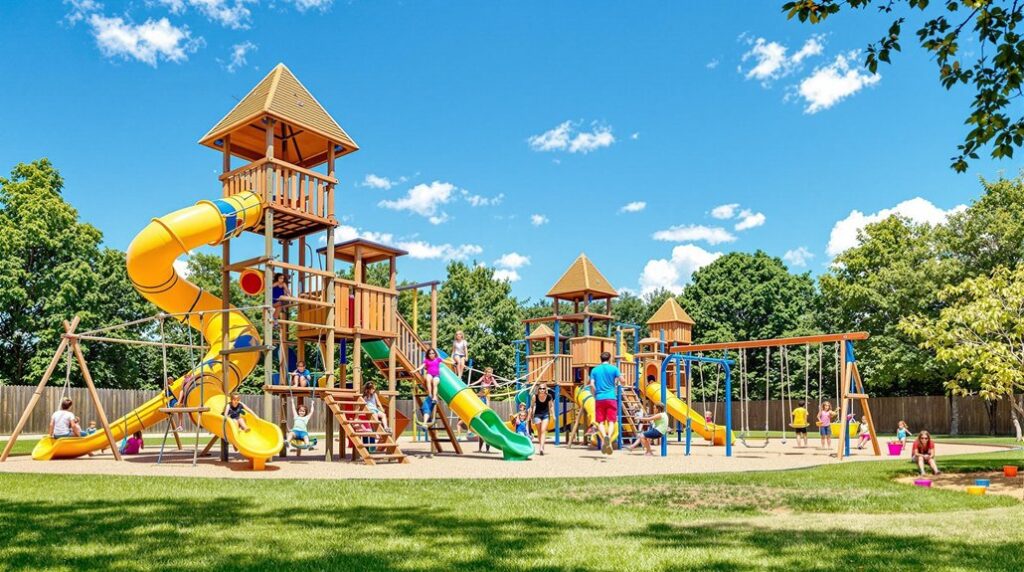
Outdoor adventure playground equipment includes climbing structures, slides, sensory panels, and obstacle courses, all aimed at fostering children’s physical, cognitive, and social development. Equipment like monkey bars and jungle gyms promote physical activity and motor skills, while interactive panels spark creativity. Safety is paramount, with standards ensuring protective surfacing to mitigate fall injuries. Customization and theming enhance play experiences, connecting children with their communities. For a deeper understanding of these elements and their benefits, explore further.
Types of Outdoor Adventure Playground Equipment
When considering the types of outdoor adventure playground equipment, it is essential to recognize the diverse structures designed to enhance physical activity and cognitive development. Climbing structures like monkey bars, vertical climbers, and jungle gyms challenge upper body strength and coordination. Slides, such as tube and rolling slides, offer varied descent experiences, while multilevel platforms foster imaginative play. Sensory and interactive panels, including music panels and texture boards, stimulate cognitive engagement through manipulation and exploration. Obstacle courses with balance beams and rope bridges promote agility and problem-solving skills. Finally, motion-based equipment like spring riders and spinners encourages group interaction and physical coordination, making each playground visit a thorough developmental experience for children. Additionally, incorporating playground markings can enrich these adventure spaces by providing structured play areas that promote active learning and engagement.
Safety Features and Standards
Outdoor adventure playground equipment is designed not only for fun but also for safety, making adherence to safety features and standards a priority for manufacturers, installers, and operators. Compliance with the CPSC Handbook guarantees equipment-related hazards are addressed, focusing on surfaces, design, and layout. ASTM International Standard F1487 provides guidelines for safe construction practices, emphasizing the need for protective surfacing to cushion falls. Openings in equipment must prevent head and neck entrapment, while adequate spacing reduces collisions. Age-appropriate design and the elimination of sharp edges further enhance safety. Regular maintenance is vital, including inspections for damage and proper installation to secure equipment. These measures collectively contribute to safer play environments for children, and incorporating thermoplastic playground markings enhances safety by defining play zones and encouraging structured activities.
Popular Playground Equipment Components
Playground equipment components are essential to creating engaging and safe play environments for children, with various structures catering to different interests and developmental needs. Climbing structures, like arch climbers and rock walls, challenge children’s physical abilities while enhancing problem-solving skills. Swinging and rotating equipment, such as traditional swings and merry-go-rounds, promote balance and coordination. Slides, including straight and spiral designs, offer thrilling descents that encourage risk-taking in a controlled manner. Additionally, interactive play equipment, like sandboxes and music stations, fosters creativity and social interaction. By incorporating these diverse components, you guarantee that playgrounds provide not only physical challenges but also opportunities for cognitive and social development, making them valuable spaces for childhood growth and exploration. Furthermore, integrating playground markings enhances the overall play experience by promoting physical activity and social interaction among children.
Materials Used in Playground Equipment
Selecting the right materials for playground equipment is essential, as they directly impact safety, durability, and maintenance. Metal is often used for frames due to its strength, while Robinia wood provides a natural aesthetic and is prized for its durability. High-Density Polyethylene (HDPE) is favored for its weather resistance, making it ideal for various components. Rubber surfaces, like poured-in-place options, offer shock absorption and safety. Plastic is versatile and low-maintenance, adding to the practicality of playground designs. Additionally, natural materials like rope and bamboo can enhance play experiences. Each material’s lifespan varies; for instance, Robinia wood typically has a 15-year warranty, while HDPE lasts many years with minimal upkeep, ensuring long-term value in playground construction. Furthermore, using child safe thermoplastic for markings can enhance safety during play and increase the overall durability of the playground equipment.
Developmental Benefits of Outdoor Adventure Playgrounds
While children engage in outdoor adventure play, they not only enjoy themselves but also gain a multitude of developmental benefits that are essential for their growth. Physical activities like climbing and swinging enhance motor skills, build core strength, and improve cardiovascular health. Cognitively, they stimulate problem-solving and boost creativity through unstructured play. Socially, children foster teamwork, improve communication, and learn conflict resolution skills. Emotionally, outdoor play reduces stress, encourages risk assessment, and promotes independence. Intellectually, it accelerates learning through experimentation and enhances observational skills. Additionally, incorporating features like thermoplastic playground markings can further enhance engagement and play opportunities. Overall, outdoor adventure playgrounds provide a rich environment for holistic development, combining physical, cognitive, social, emotional, and intellectual growth in an engaging and dynamic setting.
Trends in Adventure Playground Design
As outdoor adventure playgrounds evolve, designers are increasingly embracing innovative concepts that enhance play experiences while prioritizing safety and accessibility. The integration of natural elements like logs, boulders, and sand is becoming essential, as these features not only foster imaginative play but also encourage interaction with nature. Furthermore, the trend toward sustainable design, utilizing recycled materials, showcases a commitment to environmental responsibility. Accessibility has also gained focus, with universal design principles ensuring playgrounds cater to all abilities. Additionally, playgrounds now incorporate sensory experiences and technology, engaging children through sound and visual stimuli. These trends reflect an all-encompassing approach to playground design, balancing aesthetic appeal, functionality, and community engagement while ensuring a safe, inclusive environment for diverse users. Moreover, the incorporation of high-quality thermoplastic materials, such as those used by Project Playgrounds, ensures durability and vibrant aesthetics in playground markings.
The Role of Climbing Structures
Climbing structures play a crucial role in outdoor adventure playgrounds, offering children not only a source of physical challenge but also an opportunity to develop fundamental motor skills. These structures, such as rock climbing walls and net climbers, cater to various age groups and skill levels, promoting strength, balance, and coordination. For younger children, small plastic climbers foster basic climbing abilities, while older kids can tackle more complex designs like quad or dome climbers. The flexible designs allow for creative installations that maximize space efficiency and visual appeal. Safety considerations, including proper installation and soft landing surfaces, are essential to guarantee children can explore these structures confidently, reducing the risk of injury while encouraging active play and cardiovascular health.
Enhancing Social Skills Through Play
Outdoor adventure playgrounds serve as essential environments for enhancing social skills through interactive play. Equipment like multi-person swings and seesaws encourages turn-taking and builds trust among children, fostering cooperation. Buddy benches promote inclusion by providing a space for those seeking playmates, while group play equipment transforms areas into dynamic social learning environments. Studies indicate a 40% increase in positive peer interactions when children engage with these materials, which also support emotional development, confidence, and empathy. Activities like tug-of-war ropes enhance team-building skills, while structured games teach cooperation and rules. Ultimately, these interactive elements cultivate negotiation skills, conflict resolution, and even leadership, greatly contributing to children’s social skill development in a natural outdoor setting.
The Importance of Safety Surfaces
Playgrounds provide a rich environment for social interaction, but the safety of these spaces is paramount to guaranteeing children’s well-being during play. Safety surfaces are critical, as falls account for nearly 70% of playground injuries. Options like rubber mulch, engineered wood fiber, and interlocking rubber tiles effectively reduce injury risks. Government standards focus on minimizing life-threatening head injuries by evaluating impact forces. Regular maintenance is essential to keep these surfaces effective; neglecting this can lead to dangerous conditions and increased costs. Additionally, affordable materials like rubber mulch make safety accessible. Ultimately, having the right safety surface not only guarantees compliance with regulations but also creates a secure environment where children can explore and enjoy their playtime.
Customization and Theming in Playground Design
When designing a playground, customization and thematic elements play a significant role in enhancing children’s play experiences. Selecting a theme, such as animals or castles, not only unifies the playground visually but also inspires imaginative role-playing, promoting emotional and cognitive development. Custom design options allow you to choose equipment shapes, colors, and surfacing that align with the chosen theme, ensuring the layout suits the available space while enhancing play flow. Additionally, themed playgrounds can serve educational purposes, teaching children concepts like safety or environmental awareness through interactive play. Collaborating with experienced designers helps balance budget constraints and accessibility needs, creating signature playgrounds that reflect community identity while accommodating diverse user groups.