
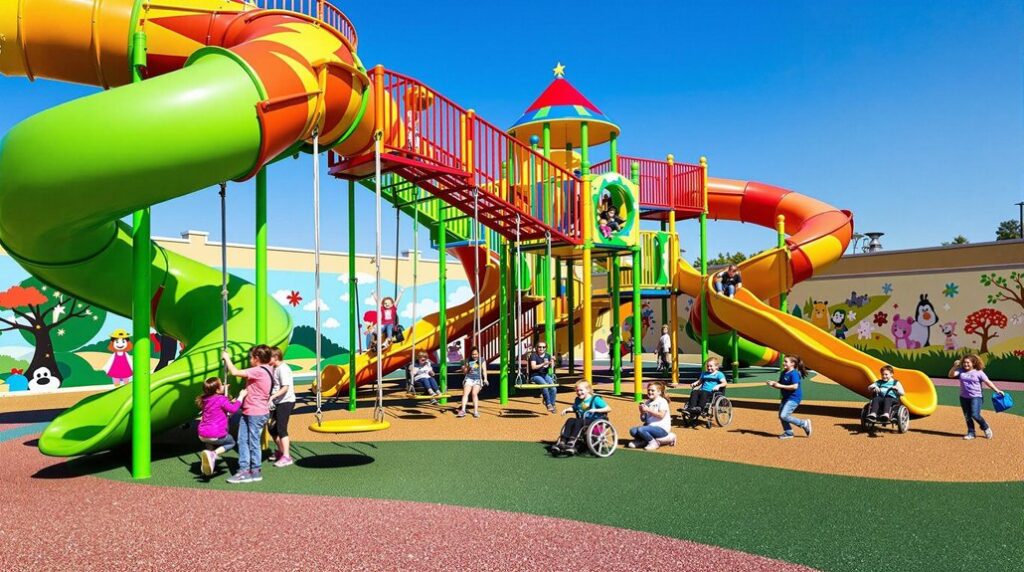
Wheelchair accessible playground equipment enhances outdoor play for children of all abilities, adhering to ADA standards. It includes features like wide pathways, ramps, and ground-level play components, ensuring easy movement and interaction. Types of equipment range from adaptive swings to inclusive social spaces. These designs promote physical activity, cognitive development, and community understanding. By prioritizing accessibility, these playgrounds foster a sense of belonging for all children. Uncover further insights about planning and essential design considerations.
Overview of Wheelchair Accessible Playground Equipment
Wheelchair accessible playground equipment represents a significant advancement in inclusive design, ensuring that children of all abilities can enjoy play spaces together. These structures adhere to ADA standards, featuring accessible paths that allow easy navigation for mobility devices. Thoughtful layout and geometry enable smooth maneuvering between play elements, while sensory considerations cater to diverse needs, promoting interaction among all children. Key features include transfer points for safe exchanges, ground-level access, and upper body support, enhancing usability for children with physical disabilities. Additionally, equipment incorporates sensory panels and auditory elements, fostering engagement and learning. By prioritizing inclusive design, these playgrounds not only enhance physical activity but also cultivate community understanding and acceptance, ultimately benefiting society as a whole.
Types of Wheelchair Accessible Equipment
Inclusive playgrounds feature a range of equipment designed to accommodate children with diverse abilities, guaranteeing that every child can engage in play. For instance, wheelchair-accessible swings, equipped with adaptive seats and safety harnesses, allow for safe motion. Ramps and transfer systems guarantee smooth shifts with wide, low-slope pathways and guardrails for secure navigation. Ground-level play components like interactive panels and sensory tables promote engagement at accessible heights. Additionally, gliders and spinners feature dedicated boarding zones and stable seating, while inclusive social spaces include wheelchair-friendly picnic tables and shaded areas for rest. These elements collectively create an environment where all children can enjoy playtime, fostering social interactions and physical activities regardless of mobility challenges. To enhance these play areas, integrating durable playground markings can further support active learning and engagement.
Key Design Features
When designing playgrounds that accommodate children with diverse abilities, several key features guarantee that all users can enjoy the space safely and effectively. Wide pathways of at least 60 inches facilitate easy movement for wheelchair users, while smooth, stable surfaces, like rubber or synthetic turf, reduce trip hazards. Ramps should replace stairs on play structures, ensuring access to raised areas. Additionally, tactile surfaces and auditory elements provide sensory engagement. Equipment must be placed at reachable heights, allowing children in wheelchairs to interact independently. Furthermore, incorporating social and solitary play zones fosters interaction and personal space. These design features collectively create an inclusive environment, ensuring every child can participate and thrive in play activities.
Benefits of Inclusive Playground Equipment
Playgrounds that incorporate accessible equipment deliver numerous benefits to children of all abilities, greatly enhancing their developmental experiences. These inclusive environments support cognitive development by providing diverse play opportunities that foster problem-solving and critical thinking skills. Engaging in social interactions enhances memory and attention spans, while sensory stations encourage exploration and learning. Emotionally, inclusive playgrounds promote empathy and understanding, strengthening friendships and community bonds. Children gain confidence and independence through shared play experiences. Physically, accessible equipment encourages active play, developing strength, flexibility, and coordination. Furthermore, inclusive playgrounds guarantee equal access for everyone, reducing barriers to participation and fostering a sense of belonging. Ultimately, inclusive play creates unique experiences that engage and inspire all children, enriching their overall development.
Age Ranges and User Capacities
As you explore the design of playground equipment, it is imperative to recognize that age ranges considerably influence both the type of equipment provided and its accessibility features. Equipment typically targets children aged 2-12, with designs tailored for specific age groups. For ages 2-5, smaller steps and lower platforms guarantee safety and accessibility, while equipment for ages 5-12 includes more complex challenges, like higher slides and climbing elements. Accessibility features, such as wheelchair ramps and paths, are fundamental across all age groups to foster inclusivity. Safety considerations, including secured swing seats, are essential to prevent injuries. By accommodating diverse user capacities, playgrounds can enhance physical development and learning opportunities for children of all abilities.
Planning and Resource Considerations
Creating an inclusive playground requires careful planning and resource allocation to confirm all children, regardless of ability, can enjoy the space. Start by selecting a site that enhances accessibility, paying attention to natural features. Incorporate ramps for elevated play components and confirm sufficient turning space for mobility devices. Choose stable surfaces, like rubber tiles, to facilitate movement and connect different play areas with accessible pathways. When selecting equipment, prioritize inclusive swings, carousels, and ground-level activities. Consider your budget closely, as ADA-compliant equipment impacts overall costs. Explore grants or community funding to support these projects, and engage the community for feedback and maintenance support. Regular inspections and timely repairs confirm the playground remains a safe, accessible environment for all users.
Safety Standards and Compliance
Guaranteeing safety standards and compliance in playground design is vital, not only for protecting children but also for meeting legal requirements. Compliance with ADA standards is mandatory for public playgrounds, necessitating accessible routes, stable surfaces, and adequate maneuvering spaces. It’s important to establish age-specific play areas to reduce injury risks, while equipment like the Sway Fun Glider and OmniSpin illustrates adherence to safety standards. In addition, surfacing must offer firm, slip-resistant materials that cushion falls effectively. Regular maintenance of these surfaces guarantees ongoing compliance, while specific reach ranges for various age groups assure accessibility for wheelchair users. Ultimately, focusing on these standards enhances the safety and enjoyment of all children in the playground environment.
Community Engagement and Feedback
How can community engagement shape the design and functionality of wheelchair accessible playgrounds? Engaging diverse community members guarantees that playgrounds cater to all users, particularly children with disabilities. By soliciting input from families, schools, and disability advocates, you can guide equipment selection and layout decisions effectively. Community meetings and surveys provide essential platforms for feedback on accessibility features and desired play elements. Collaborating with local organizations specializing in disabilities enhances both design relevance and usability. This ongoing dialogue fosters a shared sense of ownership, leading to better maintenance and care. Ultimately, inclusive playgrounds serve as social hubs, promoting interaction among children of all abilities and fostering community cohesion, which reflects a commitment to diversity and equity across the neighborhood.