
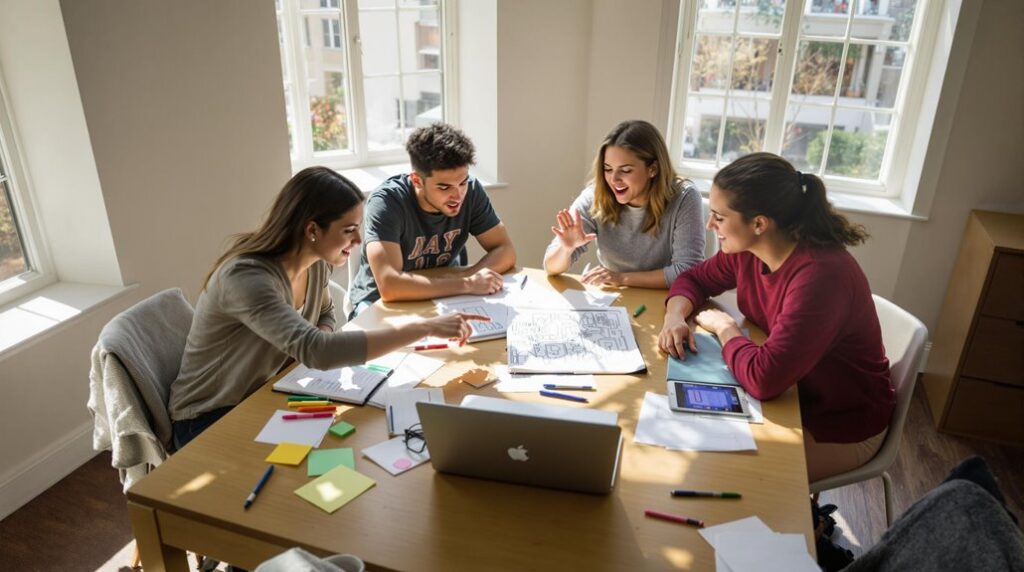
Collaborative learning transforms education by leveraging peer interaction and group dynamics to enhance student development. Through structured group work, students develop essential communication skills, critical thinking abilities, and teamwork competencies. This approach fosters creative problem-solving, builds confidence, and strengthens social capabilities through dynamic exchanges of ideas. Research demonstrates that collaborative environments prepare students for real-world challenges while deepening understanding of complex concepts. Further exploration reveals additional benefits of this powerful educational strategy.
The Transformative Benefits of Peer Learning
How does peer learning revolutionize the educational landscape? Research demonstrates that collaborative learning environments fundamentally transform student development through multiple channels.
Students engage in dynamic exchanges of ideas, fostering deeper understanding and retention of concepts while simultaneously developing vital communication and teamwork skills. This pedagogical approach cultivates critical thinking abilities as learners analyze diverse perspectives and collectively solve problems.
The interactive nature of peer learning creates a supportive community where students build confidence, enhance social competencies, and develop essential workplace skills. Through structured collaboration, students acquire the tools necessary for academic success and professional growth.
Building Strong Communication Through Group Work
While traditional classroom settings often limit student interactions, group work serves as a powerful catalyst for developing robust communication abilities among learners.
Through structured collaborative activities, students enhance their verbal and non-verbal communication skills, learning to articulate ideas clearly and listen actively to peers.
Group discussions foster the development of constructive feedback mechanisms, enabling participants to express thoughts diplomatically while respecting diverse perspectives.
The exchange of ideas in team settings cultivates essential communication competencies, including strategic discussion techniques, negotiation skills, and the ability to convey complex concepts effectively to varied audiences.
Developing Essential Teamwork Skills
Successful teamwork skills emerge as a cornerstone of collaborative learning environments, equipping students with essential competencies for academic and professional success. Through structured group activities, students develop proficiency in task delegation, mutual support, and strategic planning.
These experiences foster the ability to work toward common objectives while respecting diverse perspectives and contributions from team members.
The development of teamwork competencies extends beyond immediate academic benefits, preparing students for future workplace demands where collaboration is increasingly crucial.
Students who master these skills demonstrate enhanced problem-solving abilities, improved communication capabilities, and stronger leadership potential across various collaborative settings.
Fostering Creative Problem-Solving Together
Creative problem-solving in collaborative learning environments releases the collective potential of students to generate innovative solutions through shared knowledge and diverse perspectives.
This approach combines analytical thinking with imaginative exploration, enabling teams to tackle complex challenges systematically. Students learn to evaluate multiple viewpoints, synthesize information, and develop thorough solutions that benefit from group dynamics.
The collaborative process enhances critical thinking abilities while fostering innovative approaches to problem-solving.
Maximizing Student Engagement and Participation
In collaborative learning environments, maximizing student engagement and participation requires a strategic blend of structured activities, dynamic interactions, and well-designed group tasks that stimulate active involvement from all participants.
Educators can enhance engagement by implementing diverse collaborative techniques, including peer discussions, group projects, and interactive problem-solving exercises. These methods foster active participation while maintaining student interest through varied approaches.
The incorporation of clear goals, defined roles, and regular feedback mechanisms guarantees sustained engagement throughout the learning process, while rotation of group members and responsibilities prevents stagnation and promotes continuous active involvement from all students.
Strengthening Confidence Through Collaboration
Beyond active participation lies the profound impact of collaborative learning on student confidence development.
Research indicates that when students engage in collaborative environments, they develop stronger self-assurance through the validation and support of their peers. The process of sharing ideas, receiving constructive feedback, and contributing to group success creates a positive reinforcement cycle that builds individual confidence.
Students who regularly participate in collaborative learning demonstrate increased willingness to take academic risks, voice their opinions, and tackle challenging problems, while simultaneously developing a sense of ownership in their educational journey.
Cultivating Social Competence in Group Settings
Through collaborative learning environments, students develop essential social competencies that extend far beyond traditional academic achievements.
As learners engage in group activities, they naturally cultivate empathy, respect for diverse perspectives, and effective conflict resolution skills. These interactions foster emotional intelligence and strengthen interpersonal relationships, enabling students to navigate complex social dynamics with confidence.
Group settings provide authentic opportunities for developing vital social skills, including active listening, constructive feedback, and adaptive communication strategies.
Working together in groups cultivates crucial interpersonal abilities through real-world practice of listening, feedback, and adaptable communication methods.
The collaborative experience creates a foundation for building meaningful connections and understanding social nuances within various contexts.
Preparing Students for Real-World Success
Modern collaborative learning environments serve as vital preparation grounds for students' future professional success, equipping them with indispensable workplace competencies.
Through structured group activities, students develop essential skills in effective communication, problem-solving, and team coordination that mirror real-world workplace demands.
These collaborative experiences foster adaptability, creative thinking, and interpersonal abilities that employers consistently seek.
In addition, students learn to navigate diverse perspectives, manage group dynamics, and contribute meaningfully to collective objectives, creating a solid foundation for their future careers in an increasingly interconnected professional landscape.
Frequently Asked Questions
How Can Introverted Students Thrive in Collaborative Learning Environments?
Surprisingly, introverts excel in collaborative settings through structured roles, digital contributions, small group interactions, designated quiet time, and opportunities to process ideas before sharing with peers.
What Role Should Teachers Play During Student Collaborative Activities?
Teachers should serve as facilitators, monitoring group dynamics, providing guidance when needed, offering constructive feedback, and ensuring all students participate while maintaining a balanced, supportive learning environment.
How Often Should Collaborative Learning Sessions Be Scheduled Each Week?
Like seeds needing consistent nurturing, collaborative sessions should occur 2-3 times weekly, allowing students to develop teamwork skills while maintaining balance with independent learning and content instruction.
Can Collaborative Learning Be Effective in Online or Virtual Classrooms?
Collaborative learning remains highly effective in virtual classrooms through breakout rooms, shared documents, and interactive tools. Students develop communication skills, problem-solve together, and maintain engagement despite physical distance.
What Are Appropriate Group Sizes for Different Types of Collaborative Projects?
Like petals arranged harmoniously in a flower, ideal group sizes vary: pairs for focused tasks, 3-4 members for discussions, and 4-6 participants for complex, multifaceted collaborative projects.